When a tree needs to come out
Most people call when something changed: a lean that got worse after a storm, a big limb that cracked, a trunk that is splitting, or a tree that has simply outgrown the spot it was planted in. Others call because a tree is dead and they can see it getting worse every season.
- Leaning more than it used to, or leaning toward the house
- Cracks or splits in the trunk or where big limbs meet it
- Mushrooms or fungus growing at the base
- Large dead branches, or bare branches at the top of the crown
- Roots lifting the soil, a driveway or a sidewalk
- Too close to the roof, the foundation or a garage
How a removal actually works
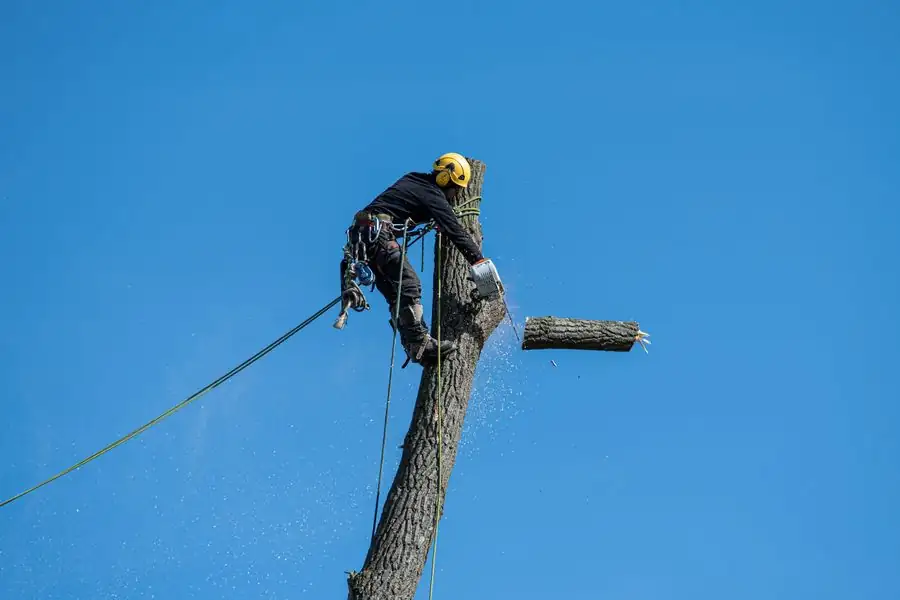
In an open yard, a crew may be able to drop a tree in one piece. Near a house, a fence or a neighbor's property, it comes down in sections: a climber or a bucket truck takes it apart from the top, and each piece is lowered on ropes so nothing lands where it shouldn't.
The biggest trees in the tightest spots sometimes need a crane. The crew decides that during the estimate, not after they show up.
When the tree is down, the wood is cut, the brush is chipped, and the yard is raked. If you want to keep firewood, say so when you ask for your estimate.
Hills, river bottoms and tight yards
The Mid Ohio Valley is not flat. A lot of yards on both sides of the river sit on a slope, back up to a hillside, or have no room for a truck. Access is one of the biggest things that shapes the price, which is why every estimate is done on site.
What to have ready
- Where the tree is, and anything close to it (house, shed, fence, lines)
- A photo, if you can take one safely
- Whether you also want the stump ground
- Whether you want the wood left or hauled